
Deciding to build an addition on your new home is an exciting time and with careful planning doesn’t have to cost you more to heat the additional space if the whole house is renovated at the same time. All too often though, the original part of the home remains uninsulated and the new addition get insulated to modern standard as in below:
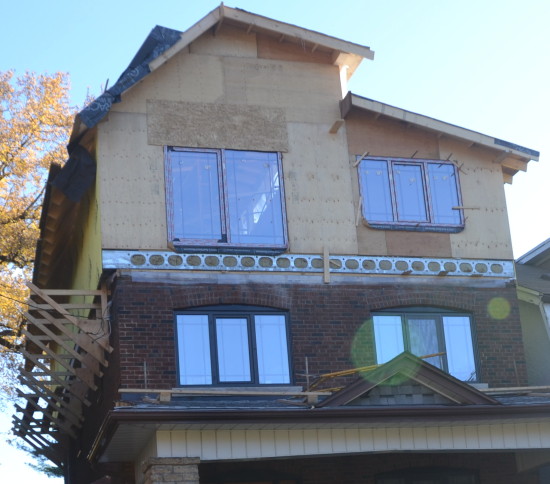
Exciting times for this modern addition on a century Toronto home. With clerestory windows facing south this addition will be finished with stucco, a nice touch for the neighbourhood. The 3rd floor addition’s platform is made with steel. Note the poly flap the platform rests on.
The detail where the new 3rd floor addition’s floor meets the top of the 2nd floor brick wall is a tricky one to handle from an air barrier perspective. How do you seal the new addition’s air barrier system to the vintage structure that doesn’t have an “air barrier”?
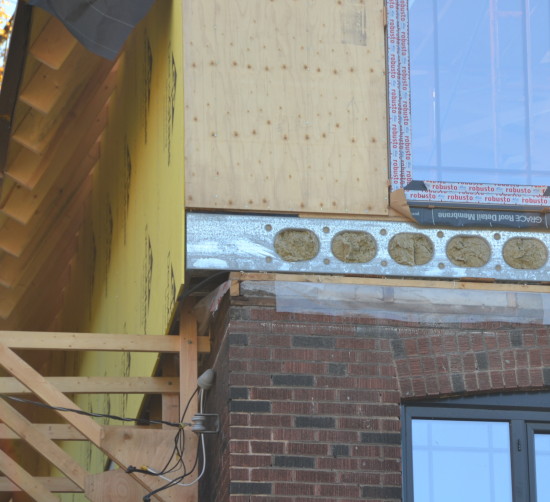
The edge detail of the floor platform shows the stamped steel filled with Roxul, the windows panned with flashing and the poly it all rests on.
Complicating matters, the 3rd floor floor cavity is bumped out beyond the main floor’s original brick walls which makes for an increasingly vulnerable joint to insulate and air seal properly. Adding insult to injury, the rim joist is made of highly conductive steel. Note the flap of poly hanging down.
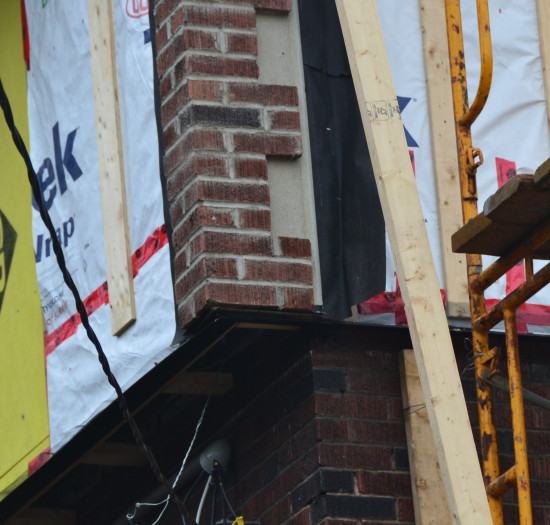
A few months later the classic stucco is being applied with false brick corners. The poly looks like its wrapped up to join the tyvek air barrier. Let’s keep our fingers crossed that the tyvek – with high perm rating – goes over the poly not behind and dries anything that fills what appears to be a poly trough.
With the steel joists covered the house gets finished with classic stucco corner quoins.
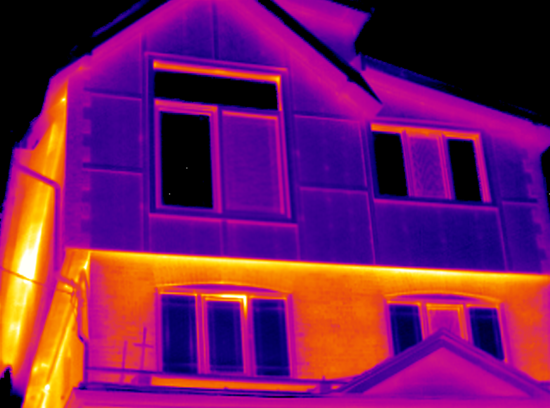
The 3rd floor addition, nearly complete shows significant heat loss at the joint between the old and the new; a typical scenario in many additions.
The infrared image shows the heat loss at the junction where old meets new. The old wall was double brick and uninsulated whereas the new addition on the 2nd floor was insulated to code. Though it’s hard to say if the thermal weakness at the joint is due to air leakage and or to thermal bridging, it’s safe to bet a little of both it taking place.