Archive by Author

Do R-values Change with Temperature?


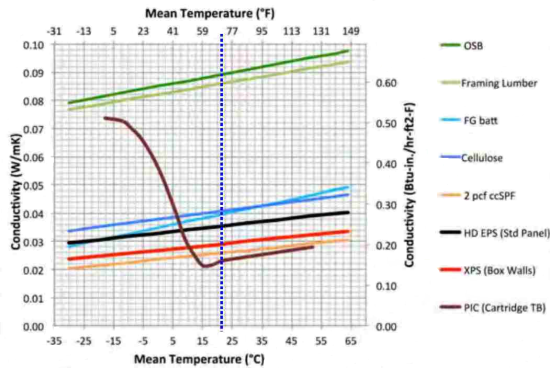
New research by Building Science Corp is showing that R-values fluctuate as temperatures change. In a great technical piece, Martin Holladay examines the latest research on the subject in his blog post:

R-value Drop GBA 2013

The starkest finding is that polyisocyanurate (ISO board) is the most erratic when the temperature of the foam itself dips below 15C the gas in its cells condense and don’t inhibit heat flow as well. As you can see from the graph above, ISO performs really poorly below -15C to the point where it approaches the R-value of wood… which kinda stinks because ISO is so much less expensive per board foot than other foam pannels.

So if you’re building in cold climates, its wise to take this drop in performance into consideration.

Standup for Science

An appeal to all of you who know a scientist, are scientists or value the work of scientist. I met up with a group of mainly UofT scientists a few weeks back called Evidence For Democracy. The story they paint is grim for the future of science in Canada. Grants for basic science are evaporating. Increasingly the grants are tied to corporations and scientists don’t work for the public good but for corporate profit. It is a worrying trend.

A few people from Science for Peace were also there.


Evidence for Democracy (E4D) advocates for the transparent use of science and evidence in public policy and government decision-making. They seem to be the Canadian equivalent of the USA based Union for Concerned Scientists.


A national, non-partisan, and not-for-profit organization, E4D formed out of concern over recent government cuts to important science institutions, and policies that restrict the flow of scientific information to the public. Governments can be tempted to make decisions based on ideology or political convenience unless the public loudly demands that decisions be based on evidence.


Potlights Leak Energy


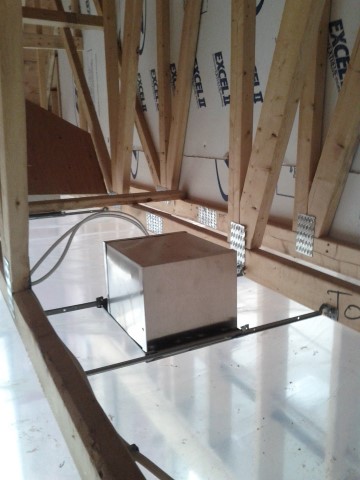
IMG_20120215_152315 (Custom)

A new Insulation Contact (IC) rated pot light in a new home. The unperforated box gives the impression its air tight… don’t be fooled!

Below is a short video detail of a pot light in a 100 year old home that underwent a Deep Energy Retrofit. This pot light was on the top floor of a house in a flat roof assembly. The roof was spray foamed with 2LBS foam – both the air barrier and the insulation.

The insulation is effective, but the air leakage is substantial and short circuit’s the foam’s good intentions. The video below shows a detail of what happens when a house is depressurised to 30 pascals and just how great the potential for heat loss, but so too the possibility of moisture migrating into the roof assembly and causing mold or structural damage.

Test your spray foam! Test it before the drywall goes on.

Review of Building Science Summer Camp 2013: The 5th Annual Uncensored Twitterview with Joe Lstiburek

I just read Peter Troast’s transcript of Dr. Joe Lstiburek’s Building Science Summer Camp 2013 and always good for banter and if not cutting edge then at least cutting in witticisms. I wanted to take up a few points in the interview to expand on:


Q: Are blower door tests necessary?

Joe: Never. You always ask the question: What is the purpose of the test? If the outcome of the test is not gonna change what your course of action is, then it’s unnecessary to do the test in the first place… It’s incredibly stupid, in the world of automobile manufacturing, to build cars and then test every one at the conclusion. So the point is, you use a tool like the blower door to develop the right process, and then execute the process. The blower door is useful to develop the process and to train those who will execute the process, but it’s a waste of time once the process is established.

BGG: In new construction and Deep Energy Retrofits, air tightness tests can change the outcome dramatically, but you have to test BEFORE the drywall goes on so that repairs can be made to the building envelope. Our builders and renovators get a lot of value out of a pre-drywall air tightness test so we know blower door testing is ABSOLUTELY necessary on each new house or DER.

Let’s break down the car analogy. A car sells for $20G and is always built in a factory to a standard usually based on ISO9000. Cars and their parts have rigorous quality assurance and quality controls in order to CONSISTENTLY produce the same high quality product; not so with houses built in Ontario.

Compare that to a house that sells for 25x more, is assembled in the field, with trades of varying training and experience in inclement weather with great urgency and the analogy breaks down. Further most cars last 15 years but a house should have a useful life 10x that of a car. I would only agree with the good Doctor’s suggestion if the builder and their trades were experienced and had an established track record meeting the maximum air leakage threshold every time. Besides, a $350 test on a $800,000 home is chump-change and until all hands on construction site are trained in Building Science (see below) and implement ISO9000-like standard practices this is the only performance test that’s done on a house. Money well spent we say.


Q: Is Passive House legitimate, or a distraction?

Joe: It’s not a distraction. It’s the place where real innovation is happening. And why? Because I think they’ve embraced all the people that everyone else has tried to pigeonhole.

BGG: We agree, Passive House the place where real innovation is happening. Its happening right here in Canada, from Natalie Leonard selling Passive Homes like hot cakes in Nova Scotia to Lyndon Than busting his brain on creative experiments with his soon to be completed Passive House in Toronto, to the good work builder Ed Marion is doing in Oakville to the excellent engineering work of young guru like Stewart Fix and his mentor Dr. Russell Richman, one of the very few academics with a trained lens on residential both new and Deep Energy Retrofits. It was announced there will be a rapprochement between PHIUS and Building Science Corp as PHIUS develops its climate specific strategy.

Q: Why is building science important for people who build houses?

Joe: Because when you get it wrong, the consequences can be catastrophic. You can die. You can get sick. You can get very uncomfortable. They can come and take your house away and sell your children. What drives a good part of the industry is risk mitigation, failure… if you get it wrong, there are consequences for it. We have two things we do in this group: we try to do good things, but even more important is preventing the bad things. And in preventing the bad things, we do the good things.

BGG: We totally agree – all hands on a construction site should be trained in the principles of building science.

Q: How does a young person or an old person, someone who is interested in getting into the building science world, get started?

Joe: The same way a lot of us did. Find a mentor. That’s how it’s done.

BGG: By coincidence, Shervin and I both had the same mentor and we just met up with him for lunch this summer in Elora. Don Eaton has trained a generation of building scientist with his infectious enthusiasm and deep understanding of the subject mater. Thank you Don.
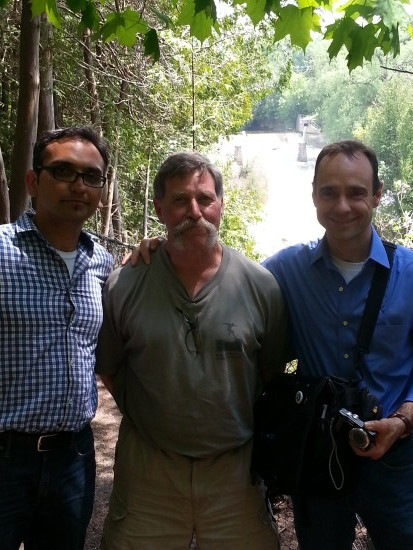
Don Greg Shervin May 2013

We recently caught up with our mentor – Don Eaton – this past summer. The backdrop is the Elora Gorge in the quaint town of Elora Ontario.

Green Building Advisor Blog Post


We’re very honoured to have a blog posted on GBA! Please have a look at our post in Green Building Advisor’s Guest Blog:

Air Leaks in Homes Insulated With Spray Foam – After using spray foam to create an air barrier in an older brick home, we were surprised to discover a high rate of air leakage.

Dense packing an 18″ Wall!

Lydon Than, Certified Passive House Consultant, will be the first builder in Ontario to have cellulose dense packed into such a deep wall assembly – 18″ deep. Mr. Than’s crunched the numbers and it will take over 14,000 pounds of cellulose to properly dense pack the walls to the density of 3.5LBS/cubic foot. BlueGreen Group showed up on the construction site last week to do 3rd party verification of equipment, techniques and density to ensure a century of high performance on this historic and unique build.

P1050343

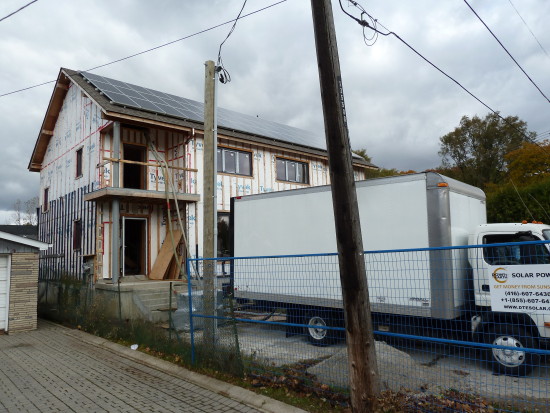
The GreenSaver trucks pull in to start the dense packing operation on this new Toronto Passive House.

Rant…

Installers of insulation have never been given the respect the “[sub]trade” deserves. Let’s face it, on the job site, the guy insulating is usually pretty low on the totem pole and yet the job is so critical to the performance and durability of the home. Nobody expecting comfort goes outside on a crisp winter day with a ripped spring jacket. Wanting comfort, we spend on good insulation and detailing like Canada Goose, Patagonia or Northface. In our homes. the fact that we don’t see it but feel the comfort daily should only highlight its importance. Not only does the choice of your insulation matter, but so too the person installing it. December 21st should be “International Hug your Insulator Day


P1050345

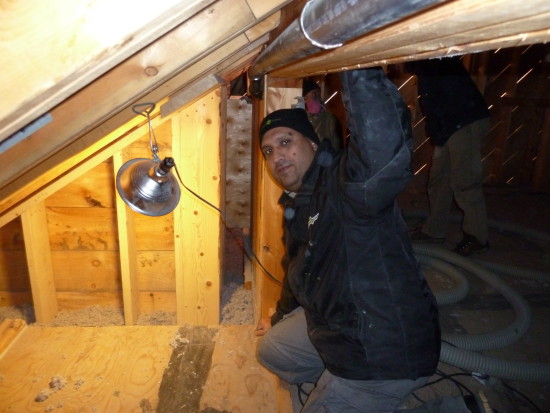
Veteran insulation and thermal envelop expert Shaiq Khan of GreenSaver taking care of business at the wall tops of this future Passive House.

As previously blogged about, there are a few techniques and measurements to ensure cellulose won’t settle;

  1. It has to be blown with a measured pressure of at least 3PSI from the hose.
  2. It has to be “tubed” vigorously and tip within 12″ of each stud cavity face.
  3. Density has to be verified either gravimetrically, or by simple accounting/geometry or – situation permitting – with infrared.
P1050346

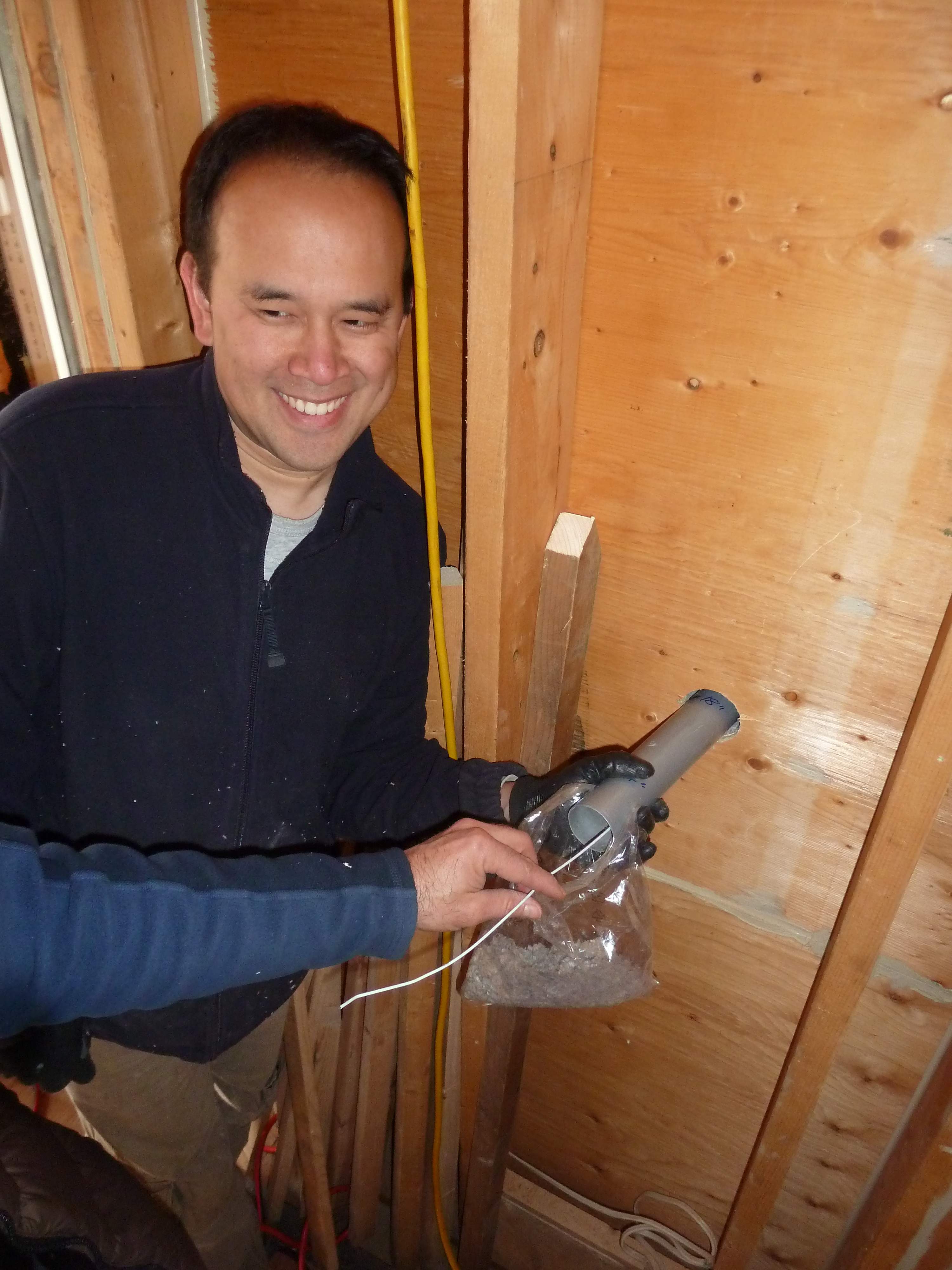
The winsome Lyndon Than and BlueGreen Group doing a cellulose core sample with 18″ tube to confirm appropriate density. For the record. the wall assembly from outside to inside: Siding, drainage plane, air barrier, wood plank sheathing, 2″x6″ outside wall, 9″ airspace, 5/8″ plywood (as seen above)  and 2″x6″ inside wall eventually finished with drywall.


When installed properly, cellulose is an ideal insulation that’s made almost entirely of a waste product. It is very durable and has one of the lowest GWP of any insulation commercially available. The proper techniques to get the density needed are simple but require training and a caring applicator. BlueGreen Group works with builders, insulators and home owners to ensure the density, tools and technique meet the specification for a durably installed high performance result.


The most Air Tight [Off-Grid] House in Ontario!

We had the great pleasure of air leakage testing a new off-grid, high performance house last week. It was the most air tight building we’d ever tested – pre-drywall!

DSC_0524

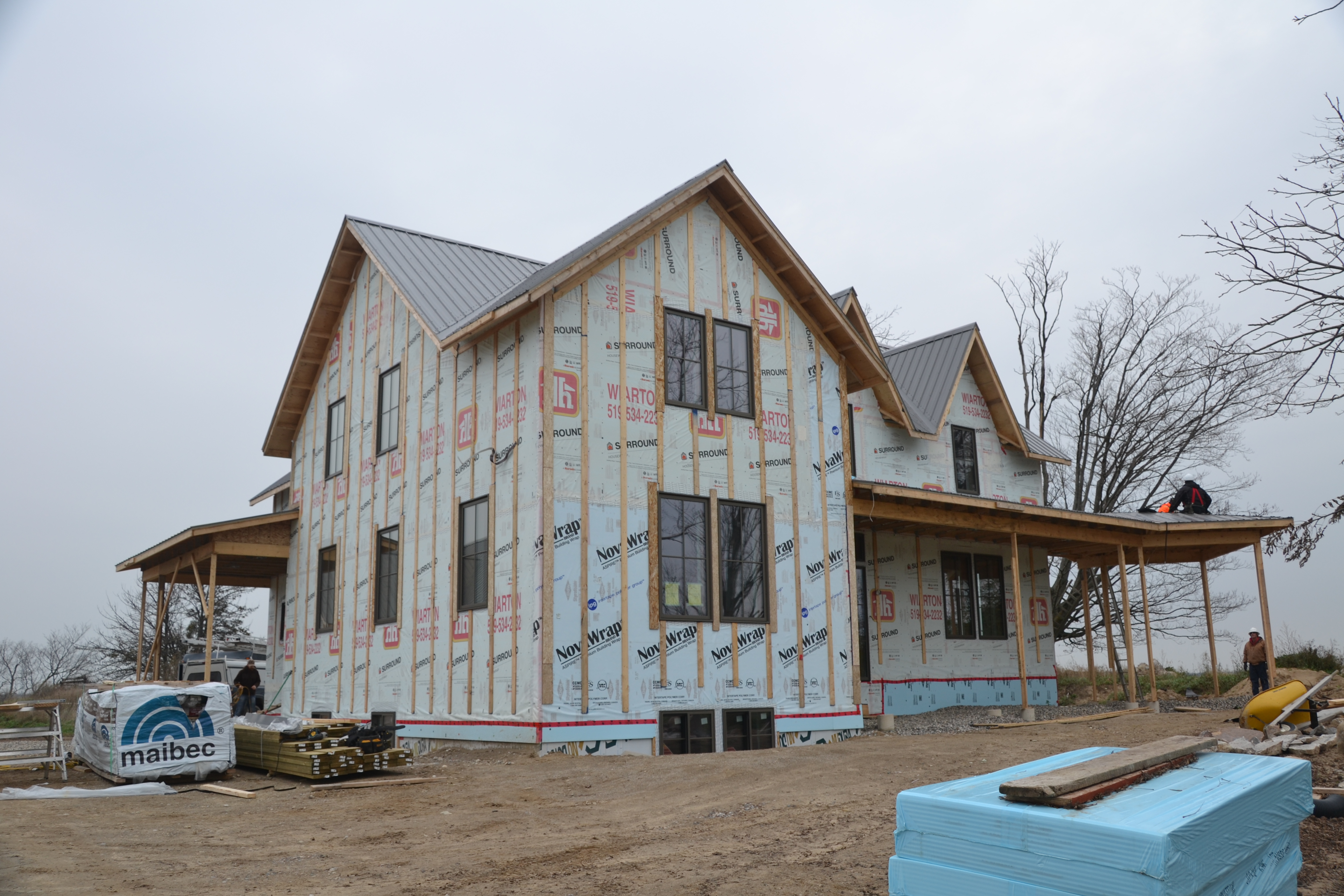
Situated on a hill overlooking the sweep of the Saugeen River below.

Builder Steven Dennison of Dennison Homes and building envelope consultant Patrick Andres, a Certified Passive House Consultant (CPHC) have officially produced the most airtight home we’ve ever tested in Ontario for an off-grid build going up in Saugeen Shores. If there’s a tighter one we want to test it!

DSC_0522

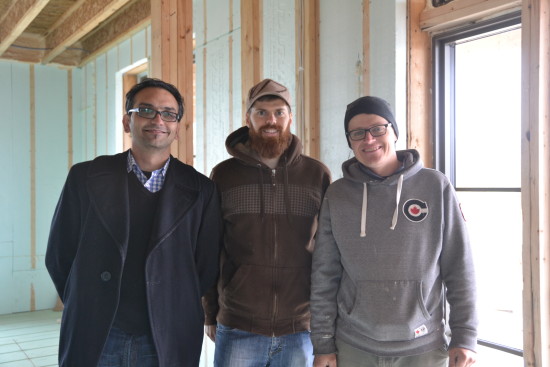
From left to right; high-performance tester Shervin Akhavi (BlueGreen Group), Certified Passive House Consultant Patrick Andres and builder Steven Dennison of Dennison Homes take moment to celebrate the home’s air tightness record for Ontario.

This lovely house built on a hillock in farm country, overlooking the Saugeen River had a traditional look. Using Nudura Insulated Concrete Forms (ICF) for the basement walls and 8 inch Structurally Insulated Panels (SIPs) for the above grade walls Steve took it up to 11 and added more insulation!

The exterior walls were clad with another 1.5” of extruded polystyrene and the interior also had an interesting product from Nudura – expanded polystyrene with integral wood strapping at 16”oc.

ENVELOPE DETAILS:

  • R 24 underslab insulation
  • R30 below grade walls
  • R 58 above grade walls
  • R 75 cathedral roof
  • R 80 truss roof
  • Doors were from Fibercraft Door Company in Hanover, Ontario.
  • Windows were produced by  Southwall Insulating Glass of Chicago with a pair of Heat Mirror 88 film in the sealed glazing.


DSC_0530

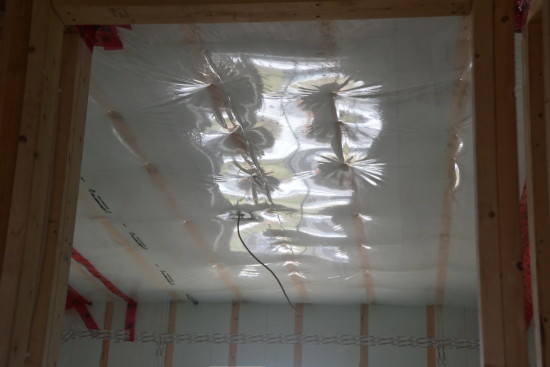
The poly air barrier on the top floor being puffed in by the air tightness test.

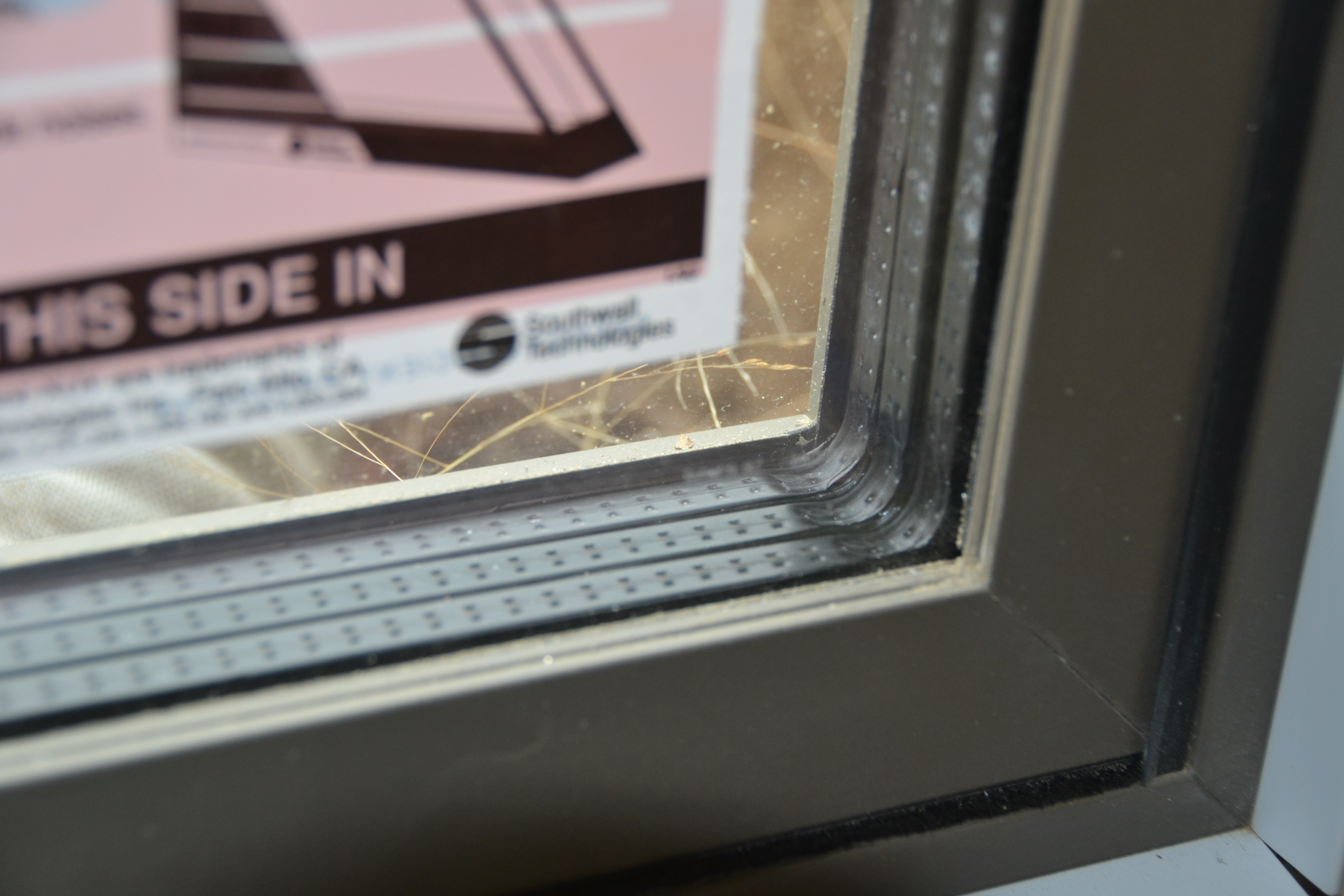
The Southwall super-insulating glass with suspended film in a fiberglass window frame were beautiful. These units have a high frame R-value and come in multiple colours with optional stainable wood veneer interiors. George Strickland, the manufacturer’s representative, has been promoting the line in Ontario for the last two years. George says “The Southwall glass units can be included in any type of window frame allowing for adaptability in style and design, in commercial or residential applications.”

George also supplied the exterior thermal doors which were made by Fibercraft. These high performing single and dual (French) doors are made with Fibergalss skins and come in smooth or wood grain stainable finishes. They also came with the Southwall glass built-in.

DSC_0518

Window detail showing the Southwall’s super-insulating glass with suspended films in a fiberglass window frame.

The air leakage rates, with a leaky cellar door came in at an amazingly low 0.52 Air Changes per Hour at 50 Pascals (ACH50) with a mere 32 square inches of equivalent leakage area (ELA). Though the wood stove and HRV were not in yet, this basement door was super leaky and the drywall wasn’t clamping the poly on the second floor.

DSC_0514

Driving in we crossed a half dozen wild turkeys (Meleagris gallopavo).

Precursor to The Nest


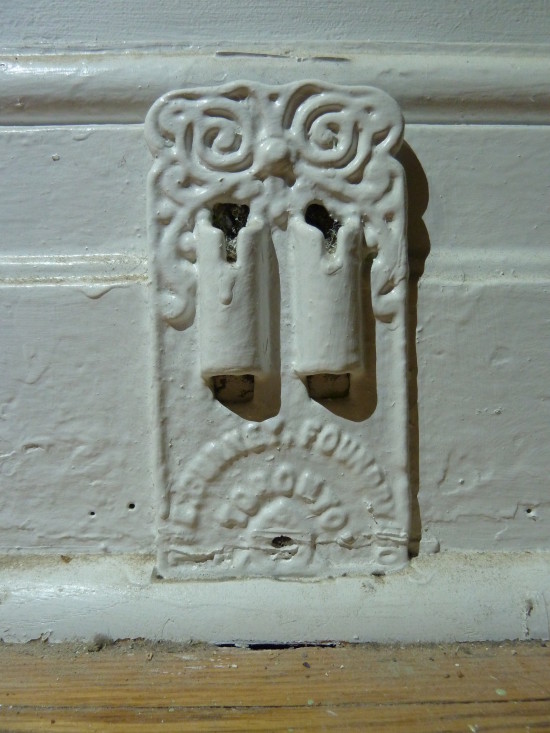
Rare are the homes we see these old relics in. When I was doing energy audits in the late 90′s for the EnerGuide for Houses program (no rebates!) I would come across these cast iron devises screwed to baseboards on the main floor – about where you’d place a thermostat. I always asked home owners if they knew what it was for, sadly, no one knew, until I came across an octogenarian who was born in the house!

She said there were a pair of cables attached to the main floor wall that passed through the slots in the plate and went to the furnace. The cables controlled the dampers for the burn rate on the furnace apparently.

E. Gurney Foundry Toronto

This ornate cast iron plate was screwed the the main floor baseboards of a1910 double brick home in Toronto. The plate reads “THE GURNEY FOUNDRY CO. TORONTO” Those were the days when we actually made things!

I was able to find an old stove catalog from the Stove Book, but wasn’t able to find the plate above. Times have changed in these old double brick houses! I shudder to see an old gravity furnace (no fan circulating the air through ducts) with a coal chute chugging away.


BGG on Brick at the Green Renovation Workshop

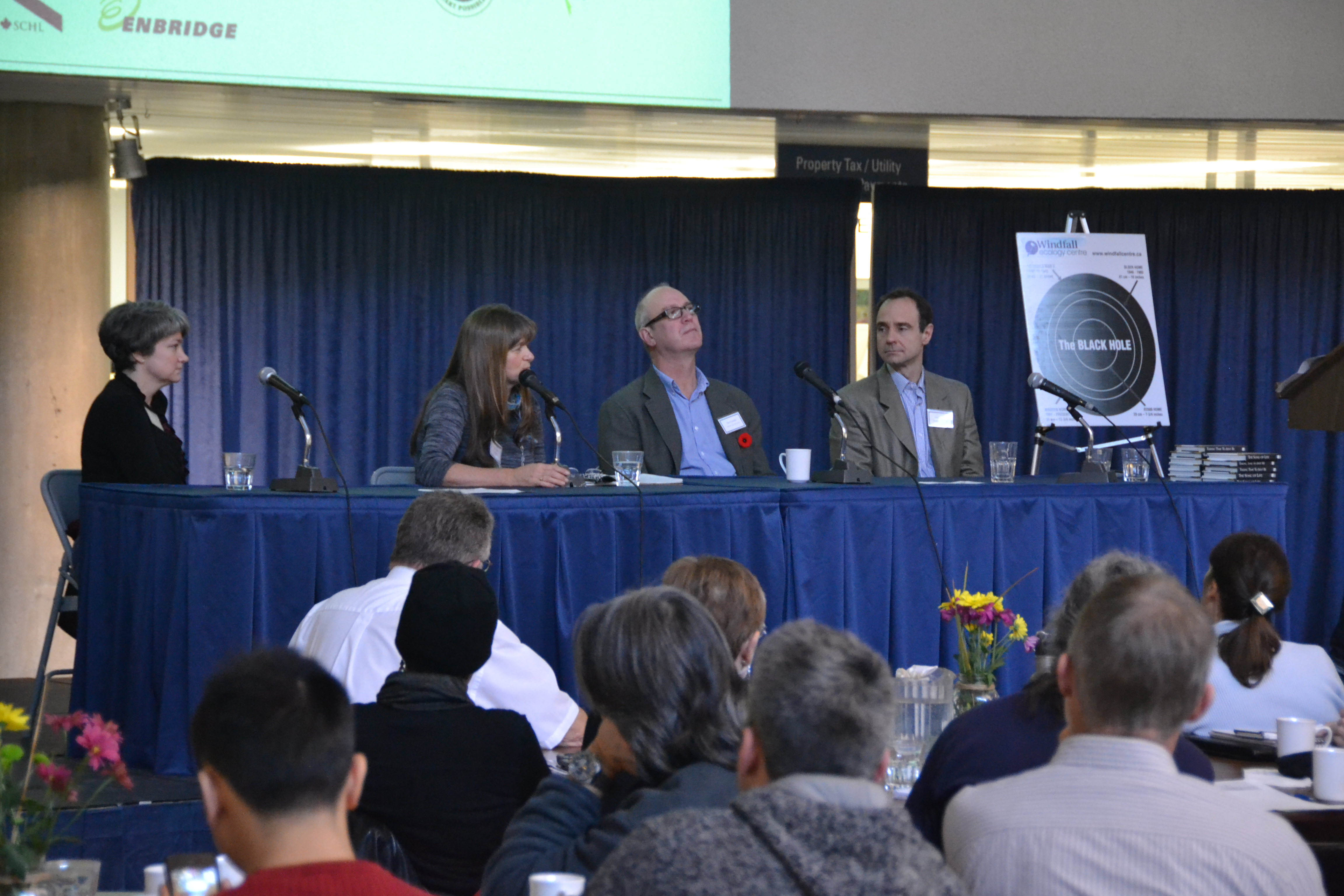
Windfall Ecology Centre and Project Neutral teamed up to host a workshop held today at Toronto City Hall. With an estimated 80 participant homeowners, BGG was asked to present on the “Double Brick Energy Retrofit”. A tough subject to cover in only 30 minutes, but we tried our best!

Following the presentation, Sandra Lester, Gail Lawlor, Paul Caverley and yours truly, did our best to answer questions as concisely as possible. Overall the feedback was positive and we’re all excited about the City of Toronto’s new Local Improvement Charge.


DSC_0050

Panelists field questions from the audience. From Left to right Sandra Lester, Gail Lawlor, Paul Caverley and Greg Labbé.


The 8th Annual North American Passive House Conference


The North American Passive House Conference opened with a reminder of why our work is so important and ended on a retrospective on why North Americans need to repatriate ‘Passivehaus’. We were reminded that we’re “spending our carbon allowance” and that ambitious goals like Edward Mazria’s 2030 challenge are needed to curb our buildings’ need for energy. The closing speech delved into the huge climatic variance in North America and also reminded us that a few Canadians played a crucial role in the development of the techniques of ‘passive home’ and even coined the phrase.

Dr. Joe's drinking problem

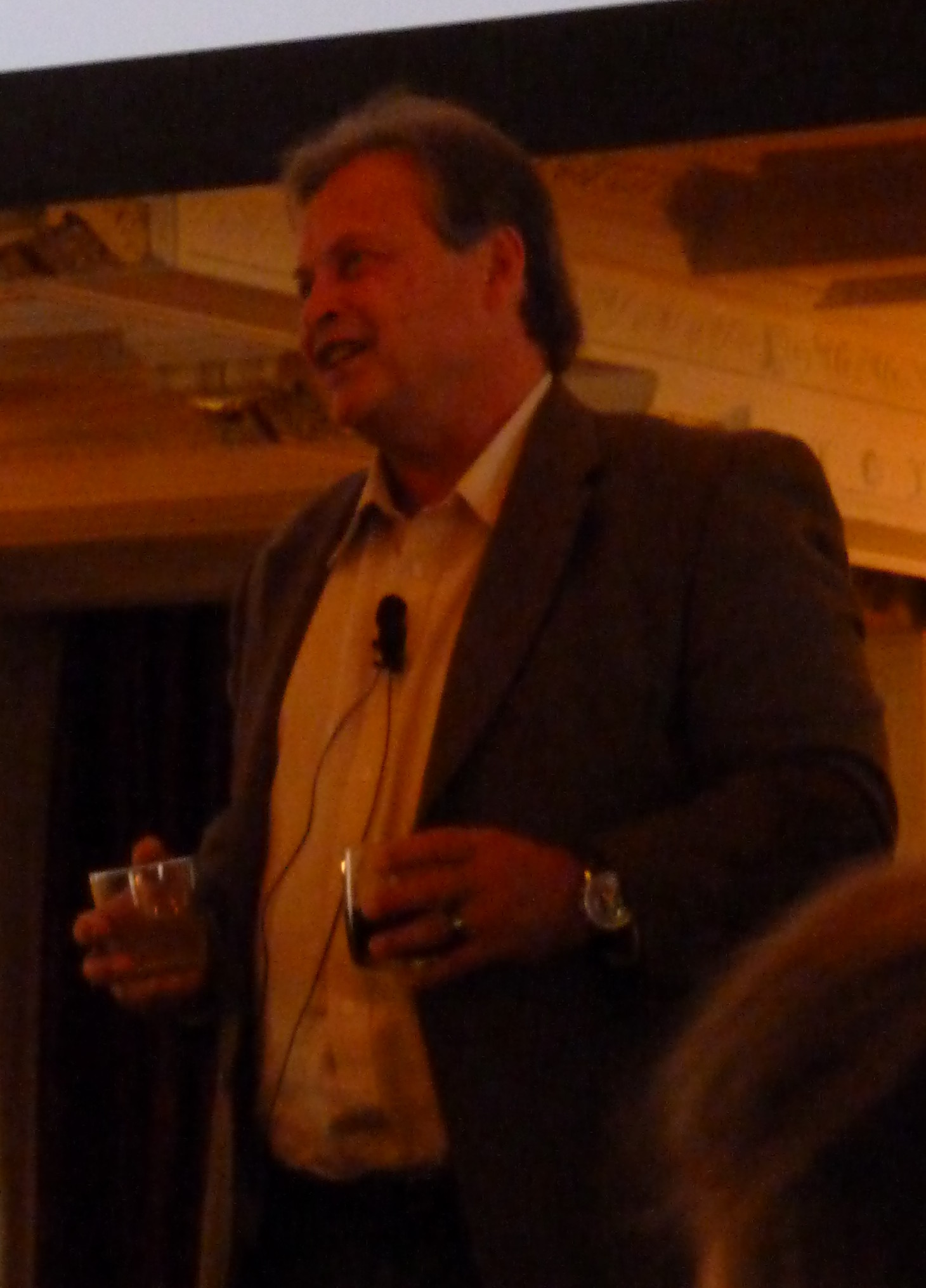
Joseph Lstiburek warns us all about “pulling numbers out of … [their/your] ass” and drew our attention to ‘over ventilation’ and why 10CFM per occupant plus a small area allowance was likely the best ventilation rate. Sorry for the fuzziness, I was shaking in the presence of the great one!


If you can only attend one conference…

The conference, held at the very grand Omni William Penn hotel in downtown Pittsburgh, was vibrant and focused on cutting edge details to do with building efficiency. It was my first PH conference and already I can say if you want to be cutting edge, you need to attend this conference if you can only attend one conference.

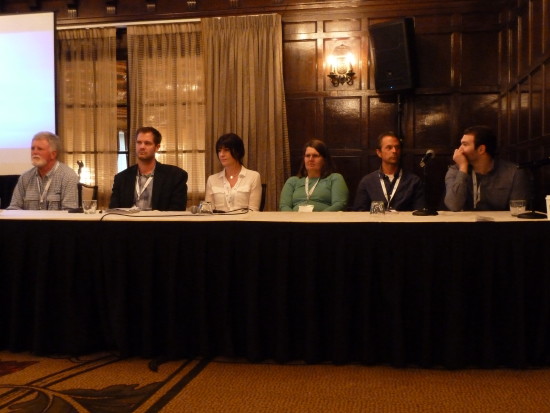
Panelist fielding a questions at the Hootenanny: Chris Senior, Brandon Weiss, Tessa Smith , Natalie Leonard (Nova Scotia) and Skylar Swinford and moderated by Dan Whitmore.

Panelist fielding a questions at the Hootenanny: Chris Senior, Brandon Weiss, Tessa Smith , Natalie Leonard (The green one) and Skylar Swinford and moderated by Dan Whitmore.

There were plenty of Canadians at the conference and two towering participants need mention here; Natalie Leonard and Dr. Russell Richman. Natalie is an east coast builder and has more North American passive homes under her belt that anyone. I heard her as a panelist at the hootenanny and her plain talk set her in the pantheon of the best high efficiency builders in North America.


Ryerson University and Building Science

Dr. Russell Richman also gave a talk, but more importantly, two of his graduate level students, David Hawkins and  Matthew Tokarik were in attendance and David gave a talk on building quality. It bears mentioning that no other academic on Canadian soil is advancing the super high efficiency agenda more that Dr. Richman.

Other notable Canadians in attendance at the conference included architect Terrell Wong, builders Sylvia Cook, Ed Marion, Matthew Schiedle, Kathy Garneau and window manufacturer Stephen Thwaits.

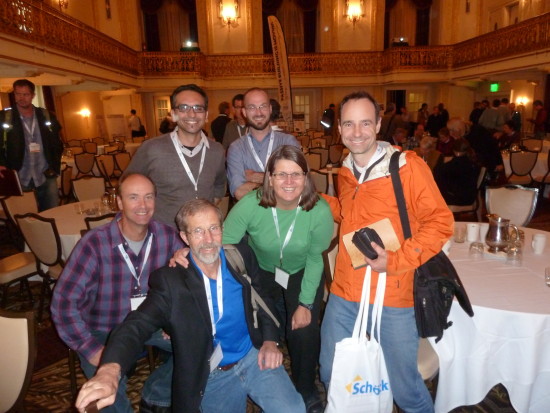
L-R at back: Shervin Akhavi, Mike Anderson, Front: Ed Marion, Peter Amerongen, Natalie Lenard and Greg Labbé.

L-R at back: Shervin Akhavi, Mike Anderson, Front: Ed Marion, Peter Amerongen, Natalie Lenard and Greg Labbé.

In the end PHIUS President Katrin Klingenberg, long suffering and doggedly determined, shared her thoughts on the necessity for keeping the performance high while being flexible on the future requirements of a new PH standard. For example, one can build a PH in California with insulated 2×4 whereas the climate makes things significantly more complicated in other climates. So the concept of a North American made, equally stringent but flexible climate specific.

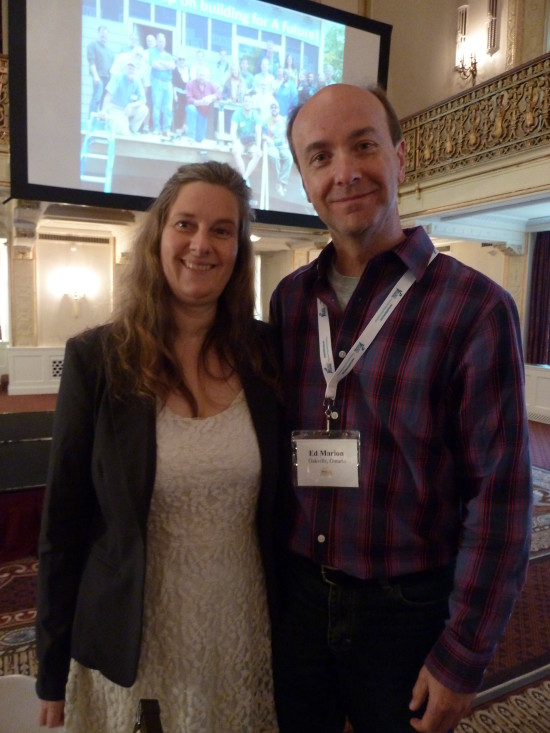
PHIUS President Katrin Klingenberg and Oakville Builder Ed Marion pose post conference.

PHIUS President Katrin Klingenberg and Oakville Builder Ed Marion pose post conference.

Fianlly, Katrin presented evidence that Rob Dumont coined the term “passive house” in his paper circa 1973 entitled “Passive Solar Heating – Results from two Saskachewan Residences.

Which stated in the introduction “Considerable interest has been shown in the use of passive solar heating. Two conferences and numerous papers have dealt with this tpic. The pioneering work of Trombe, Balcomb and Anderson has led to a greater recognition of the cost-effectiveness of passive solar heating. For Canadian imate conditions little detailed work has been done in this area. A number of recent papers by Cooper, Gilpin and Jones and Tymura present theoretical studies of the performance of windows and passive houses in Canadian conditions.”

Apparently both Katrin and Dr. Lstiburek had to dig information for their respective presentations from “stacks” in a place called a “library”…