Blog

Shedding Light on the Skylight

Skylights – the easy button for importing sunlight – are a pretty convenient way to bring in lots of sunlight into a specific area of a home even though they can throw a wrench on home performance new or existing. A good architect can always to get natural light deep into a new, moderately sized home without using skylights. But for existing homes, the Siren song is strong as orientation, shape and window openings are pre-determined.

The seduction of natural light suffusing living space is strong and few area aware of the consequences that can range from overheating in summer, condensation and draftiness in winter, peeling paint, rain leaks or ice buildup are just some of the real consequences if design and installation aren’t done carefully. So if considering, at the very least, have quick look through what we see are common problems associated with skylights.
DSCN0429 (Custom)

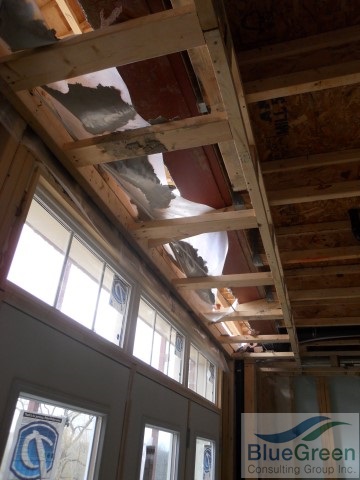
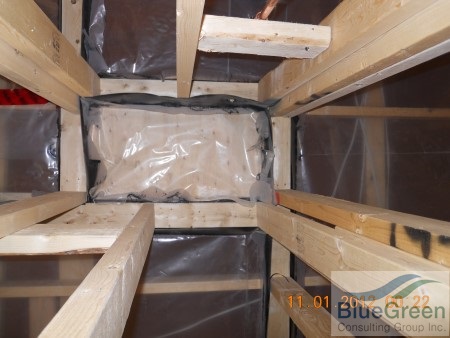
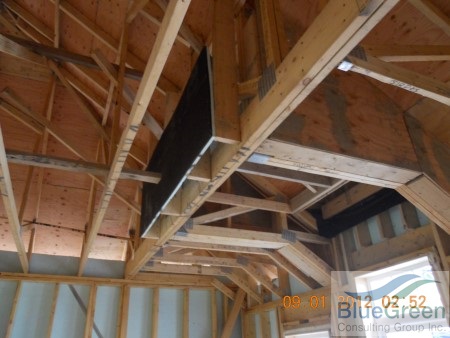
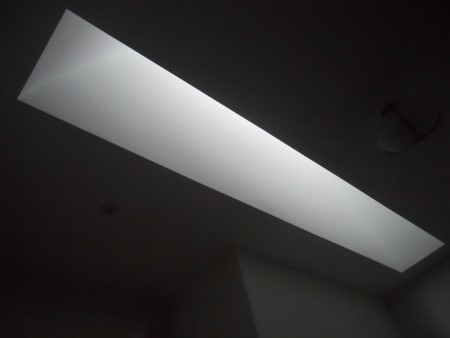
Beautiful, natural light… our connection to the outside world. This skylight has a pyramid-shaped “tube” connecting the ceiling plane of the 2nd floor to the roof-line and curb of the skylight. The base of the pyramid was 12′ long and another 12′ high and 2′ wide. That’s ~300 square feet of wall area that wasn’t accounted for in the home’s HVAC design losses.

There’s a lot of star power on the home building and renovating circuit in Canada, but no one offers more practical considered advice than Jon Eakes who’s been at this for most of his professional life. Jon has a number of great articles on the topic of skylights for a cold climate and doesn’t mince words for selecting a skylight if it can’t be avoided. We agree, the insulated curb above the roof line gets short shrift too.

In our diagnostic services over the years we’ve had numerous complaints of drywall finishes and paint drooping off the ceiling, to water dripping off the skylight, frost on the skylight and ice dams near skylights; no shortage of pain and discomfort. Most often, the tube connecting the room to the roof hole needs better air sealing and insulating, but quite often, its the skylight itself or just the sheer length of the “tube” that connects inside to outside. That ‘tube’ needs to be continuously insulated from ceiling to roof line and no air leaks in between – this is hard to do with trusses and framing getting in the way. Often spray foam is used successfully but do check over the work.

The longer the ‘tube’ the more orphaned (colder) the skylight becomes and the more prone it is to condense indoor humidity. Some builders and designers suggest that the answer is to install a register in the tube just under the skylight to ‘wash’ it with warm conditioned air. This option would be appealing if it weren’t or the fact that running a duct through an attic poses its own problems. If your home currently suffers form condensation or general discomfort in winter, Eakes suggestion of installing a lens at ceiling height is brilliant.

Here are some of the issues we’ve seen over the years:
P1050696 (Custom)
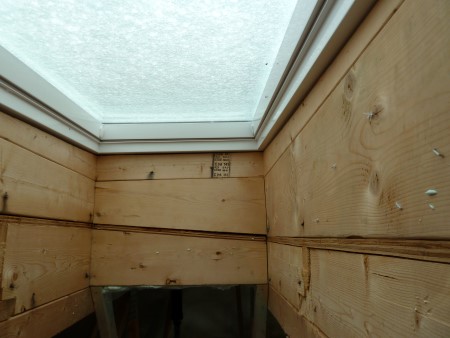
The band of plywood roof sheathing can be seen separating the insulated hot roof underneath and the curb above the roof line. Insulating above the curb is equally as important. In the case above, the hot roof meant that the tube didn’t need to be insulated.
 

DSCN0633 (Custom)

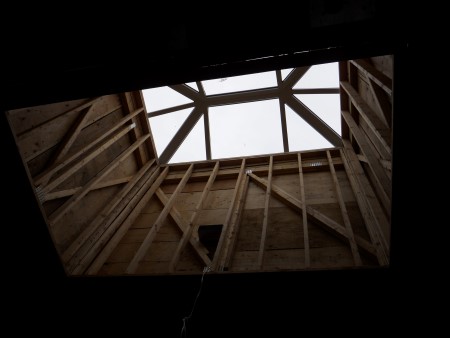
This skylight is more traditional looking but has a huge ‘tube’ running through the attic. Detailing of this tube often gets short shrift… because its in the attic and nobody cares!
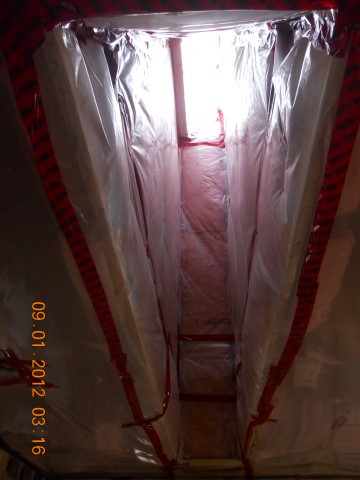
DSCN0329 (Custom)

This is the same skylight that’s in the video below. I was there when a pair of Québeckers had to drywall the 2′ wide ‘tube’. It was nearly 2 stories in height!
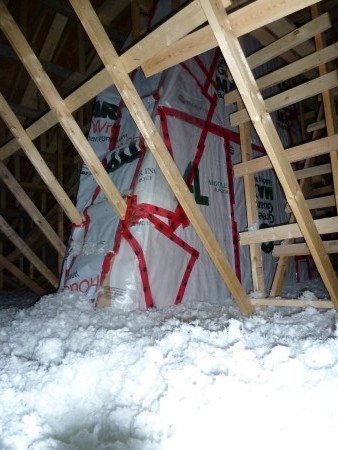
P1010311 - Skyligh w poly (Custom)

The skylight ‘tube’ from the attic side rarely gets well insulated and to reduce heat loss along its length, best if well insulated and sealed at top against roof line. Note the bottom corner has poly vapour barrier on the outside, on the cold side, this is in Canada – see what I mean by short shrift?
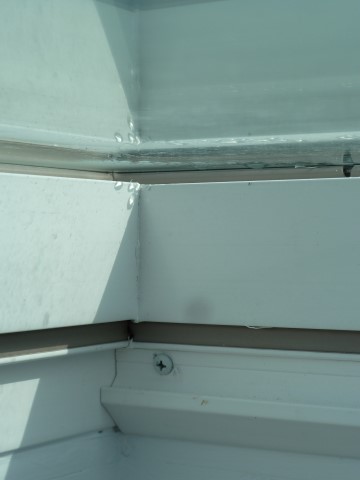
P1060412 (Custom)

This skylight was condensing humidity in the house under construction which has typically high humidity with new curing concrete, drywall mud and latex paint. What’s concerning is that this skylight was in a bathroom ceiling and it will be humid. See the condensation near the breach? With the house being depressurised by blower door, a whistling sound could be heard coming from the gap in the butt-edge of the IGU to frame seal – that’s NFG. See video below!
 

Comments Off

The Furnaceless Room

As mentioned previously, high performance builders are a rare breed in this era of cheap energy and sharing information on new techniques is most sought after and appreciated. So it was last week, that Graham Fisher and I, payed a visit to Ed Marion‘s near Passive House.

Ed is constantly aiming to minimise mechanical systems and ultimately to keep things quiet. In super insulated houses, there’s no pressing need for a typical furnace and because these homes tend to be an oasis of quiet, the mechanical equipment that does get installed needs to be very quiet. Check the poor-quality video below to hear Ed’s mother’s tongue and the landscape crews’ background noise.

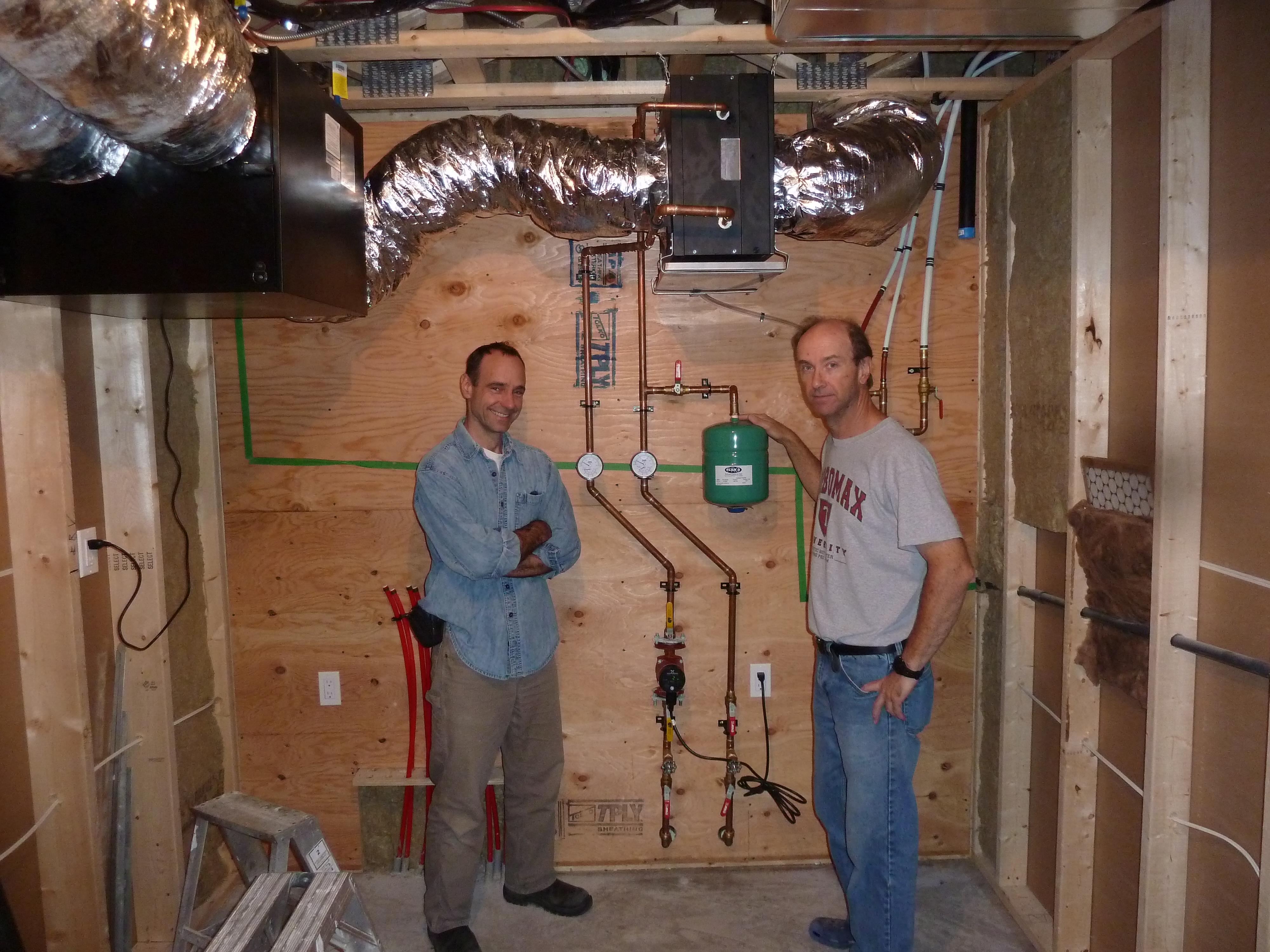
P1070028

The “Furnaceless Room” has lots of potential storage space. Though in floor radiant tubes were installed, the system wasn’t connected. On the ceiling top left corner is the ERV and mid picture on ceiling, is the pre-heater for the incoming air. Note the two lines that circulate a glycol filled earth loop to temper the incoming air.


Comments Off

The Zen Master on Heat and Humidity

High performance builders are a rare breed in this era of cheap energy and sharing information on new techniques is most sought after. So it was last week, that Graham Fisher and I, payed a visit to a sage of Passive Building – Ed Marion. In high performance houses, the balance of heat, humidity and noise needs to be carefully considered and on this build in particular, Ed brought us in on a secret.

We found Ed contemplating the mechanical symbiosis in the laundry room of his latest build. Ed’s teaching was on assembling systems that benefit from each other and the machines in question were the laundry machine, the refrigerator and the hot water tank. I should elaborate that all 3 units were heat pumps – or machines that use electricity to move heat from one place to another. The washer dryer combo was a condensing unit (ie no exhaust dryer vent pipe), the fridge is like every other and the hot water heater was an air source heat pump.

Fridge + Dryer = Hot Water

Enclosed in one basement room, the dryer and refrigerator produce waste heat and possibly the clothes dryer/washer produce a bit of unintended humidity too. The waste heat is in the air of the laundry room and thankfully, the new GE air source heat pump water heater will extract the excess heat in the room’s air and as a side benefit condense any basement humidity while at it. Its perfect ecology where cooling beer produces hot showers. What’s not to like?

When we were leaving I saw Ed moving the yoga mats and exercise machine into the room… not that’s what we call earning a shower!


Fridge (Custom)

The fridge freezer produces excess heat in the room.

Wash dryer (Custom)

This condensing dryer produces waste heat when in use and may produce a bit of humidity too.

DHW (Custom)

This air source heat pump has setting that range from full air source heat pump to combo to electric back up. This water heater will collect the wasted heat from the other appliances in the room. Note the heat trap and yes, the pipes will be insulated…

Comments Off

Avoiding Condensation on Refrigerant Lines

In building durably, we do our best to avoid condensation from forming where its not managed or wanted. As an example, when insulating heat pump or AC refrigerant lines, a quality, high R-value, seamless foam sleeve is standard practice in the HVAC industry.

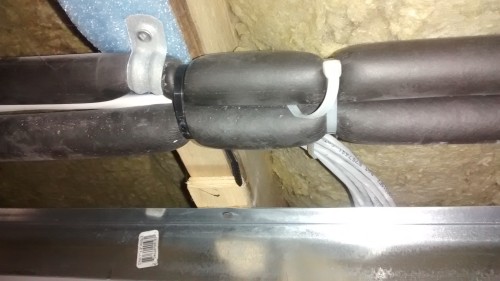
By and large, the factory supplied pre-assembled units work fairly well, but in talking to Passive Home builder Ed Marion last week, he observed the darnedest thing; condensation forming at hangers and zip-ties where the insulation was compressed. The thermal bridge created at each compressed are was enough to precipitate water out of the air and cause puddles on the ground. Perhaps its worth using a wide band, durable tape to tie the lines together and use a hanger with a wider supporting face…

IMG_20140730_152415210

Though not present in the photo above, Ed Marion noticed condensation forming on his refrigerant line where the foam insulation was compressed at hangers and zip-ties.

Comments Off

Do Origami-Inspired Homes Perform?

Simplicity

There’s a reason every high performance car is sleek and compact in shape; it improves performance. The same applies to centuries-old sculptures that keep their features and endure centuries of weathering over time; keep it simple in shape. In the previous blog post we talked about the current trend to build large homes that have poorly designed floor spaces, but next on the agenda is physical shape and how it impacts our lives, our comfort and the energy efficiency of the building.

Finding beauty in simplicity

Homes are functional expressions of art that have to be durable, comfortable and preferably virtually maintenance-free. As humans, we’re attracted to or at the very least feel flattered to be around beautiful things. When we distil the beauty of everyday objects or features of a home down to its very essence, typically they result in simple designs that meet our ergonomic needs. Take furniture shops like Mjölk in the Junction, they retail the best examples of functional objects that are honest and essential. Not all furniture is loved, but those that do evoke caring and are always welcome by the next generation as good design transcends time. This is the essence of “Not so Big House” series of books written by Sarah Susanka which urges us to spend not on size and complexity, but on good small design with thoughtful detailing. So too the Europeans that have been subject to phenomenally higher utility prices, they have been building simpler shaped, super efficeint homes for 20 years now and have even inspired hash tags like #BoxyButBeautiful.

Complexity ≠ Efficiency

Let’s get one thing straight – complexity works against efficiency in so many ways. Things get missed in the design that have to be solved in the construction phase or worse, they just dry walled and painted over. Right from the start, complexity needs more planing, more explaining and once construction starts, framers have to do more cobbling and inspectors miss things because there’s so much to look at.

Yes, the detailing can be done properly but its often overlooked. Have a look for yourself at how varied and complex the features of the origami home can be!

smallDSCN1042 - Complexity (Custom)BGG

This fine example of pastiche architecture would be a challenge for any experienced trades person who looks after insulation and air sealing details. Typically though, insulation is relegated to a low-wage labourer with little experience when this job really deserves a professional’s attention.

smallP1000288 (Custom)BGG

This lovely main floor side attic with a tin roof will get short shrift on insulation detailing. The brick of the 2nd floor wall is supported by a steel ‘I’ beam, supported by a column on either side. With no attic hatch to do QC, what’s the incentive to detail everything right? See video below for a look ingside.

smallDSCN0477 (Custom)BGG

Lets be frank and call it what it is: a side attic with a huge steel beam running though it. These areas are rarely insulated and air sealed properly because its difficult to do well.


smallDSCN0353 (Custom)BGG

Looking up toward the 2nd floor ceiling, this is a dead space. Its 2 square feet of floor space that could have been added to a closet. This is what happens when you have room to squander, you get lazy in the design and layout.

smallDSCN0309 (Custom)BGG

The origami wouldn’t be complete without fetishising the dormer. You can see the extent a framer needs to go through for that “Cathedral look” inside a nameless 2nd floor window.

smallDSCN0414 (Custom)BGG

Large houses have more point loads and therefore more columns and built-up beams along outside walls. Again, these require planning and detailing to avoid thermal bridges.

smallDSCN1059 - HVAC meets Steel (Custom)BGG

A house with a huge footprint has point loads and beams that disrupt HVAC runs. Here we see HVAC art really, but what its spells is discomfort if not accounted for in the design stage.


smallDSCN0463 (Custom)BGG

The significant thermal bridging that will take place at each powder coated steel column is huge. Unless the builder uses a good insulated sheathing and details the connections properly, this house will be comfort challenged.

smallIMG_20120314_101522 (Custom)BGG

This expensive bump out in the wall is for a fireplace gas insert. Its unnecessary if it could be bumped in, but we like clean lines in homes: no bulkheads and flush fireplaces! Check below to see all that’s gone into making this happen. With all the extra framing and the mini roofed attic, its a lot of detailing.

smallIMG_20120314_101448 (Custom)BGG

What the bump out in the photo above looks like in the basement. Lots of framing and a shallow cubby that serves little purpose.

smallDSCN0454 (Custom)BGG

The kitchen sink bump out and the fireplace bump out; its a two for one!

smallP1000285 (Custom)BGG

Its official, everyone thneeds a bump-out!


smallIMG_20120319_095111 (Custom)BGG

The following 3 pictures are a sequence of what goes wrong in a “bump-out”. It starts by stating that its expensive to add 4 more corners to the building both from a building perspective and an energy efficiency perspective.

smallIMG_20120319_094854 (Custom)BGG

From the ground up: following the photo above, this is what it looks lie in the basement. We see 4 ducts, a pair supplying each above grade level. Notice the ducts all had to bend around the header and that each 45 elbow is 10′ of equivalent duct resistance to air flow.

smallIMG_20120319_094947 (Custom)BGG

On the main floor, we see a box in each corner for ducts that run to the 2nd floor. Putting a duct in an outside wall is not good design practice, its even worse in a corner.

smallIMG_20120319_095017 (Custom)BGG

The 2nd floor when the ducts turn in and come up through the floor. The conditioned air will have lost both pressure and desired comfort on its journey up.

smallP1000273 (Custom)BGG

As Passive House builder Ed Marion likes to say about this one “It has bump-outs on bump-outs!”

smallP1010329 (Custom)BGG

Detailing for a good air seal along this stepped foundation wall isn’t impossible, but it takes some focus.

smallP1000297 (Custom)BGG

What the stepped wall above might look like outside and inside…

smallIMG_20120314_125104 (Custom)BGG

The pony wall to foundation wall transition is never elegant, especially when its covered by roll insulation.


smallP1000306 (Custom)BGG

Its been monikered “The Bonus Room” because of the constant stream of complaints home owners have for this room above the garage. Its more exposed that other rooms in the house and is orphaned form the furnace.

smallP1000280 - roof (Custom)BGG

With the large catchment area of this roof emptying out onto one small length of eaves trough, its just a mater of time before the house suffers an ice dam.

smallP1010341 (Custom)BGG

Like the house above, the large catchment area of this roof empties out onto one small length of eaves trough.


Comments Off

Does Pastiche Architecture Fulfill the American Dream?


DSC_0156 (Custom)

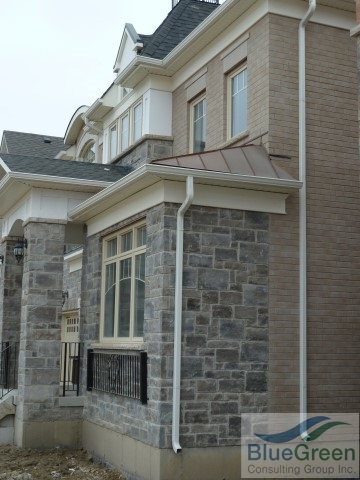
Drive out to any of the bedroom communities outside the GTA and you’re likely to stumble on it; huge, clunky homes that are so complex in shape that they’re penalised on energy performance, uncomfortable in certain rooms, often challenged by ice dams and taxed by higher maintenance costs.  Having just as much useable space as much smaller well designed houses, these large homes squander conditioned floor space with ostentatious frills to the point where buying more is really less.

Pastiche “Architecture”

When we look at these designs, they’re reminiscent of days of yore… but from what era exactly? Some Victorian, maybe a hint of Colonial, Baroque or Renaissance – we’re not sure, but what we can say is that all the fused elements appeal to municipalities with new land to squander . In the city where land is at a premium, designs tend to be constrained by small lot size, but not in the outskirts of the GTA. Don’t get us wrong, we understand that beauty is in the eye of the beholder, but why so much pastiche?

As to who’s responsible for this largess? Its a chicken before the egg thing we suspect. Are developers pushing pastiche because they know it sells or are buyers just interested in eye-candy they see in glossy magazines even though these homes likely won’t serve them well? Its true that many of these homes are snapped up by new immigrants, who thankfully tend fill the house with extended family, but really, the design doesn’t reflect who they are and the thermal enclosure on these large homes isn’t optimised for efficiency or their family, so what gives? Is it part of a gold rush to own a piece of the glamourised American dream?

What ever the underlying cause, we think a good architect is the cure. Its true, not all are created equal when it comes to efficiency, but a good architect knows how to proportion and optimise any space for daily functional use and can help you make good decisions on how to build an optimised house on a smaller scale that reflects your values and aesthetic sensibilities. Smaller homes are easier and less costly to build, maintain and operate and a good architect can help you make the building timelessly beautiful so that you’re intrinsically motivated to maintain it and it holds its value! If your architect doesn’t focus on efficiency (good one’s usually brag about their laurels on their web sites), we can help!


DSC_0155 (Custom)

With numerous gables and dormers, this roof cost a lot to build: could the money have been better spent on optimising the efficiency and useable floor space?

DSC_0160 (Custom)

Even the town homes are designed with the same ‘flair’. With cascading, complex roofs, its just a mater of time before ice dams settle in.

DSC_0164 (Custom)

With more peaks and valleys than the NASDAQ, this model house is representative of the mini chateau going up around Toronto.


DSC_0169 (Custom)

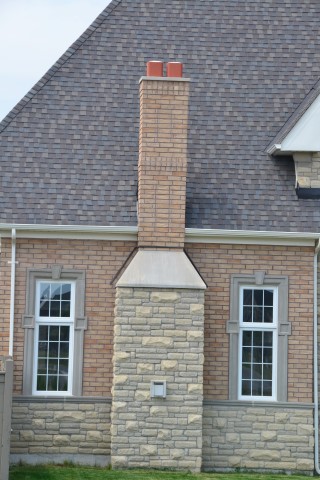
“The Faux-chimney”: I can’t get over the cost that went into building this chimney detail and all for naught. See the gas fireplace vent at head-height in the yard? That’s the vent, there’s no need for the masonry chimney (see below). There’s no wood burning appliance in the house.

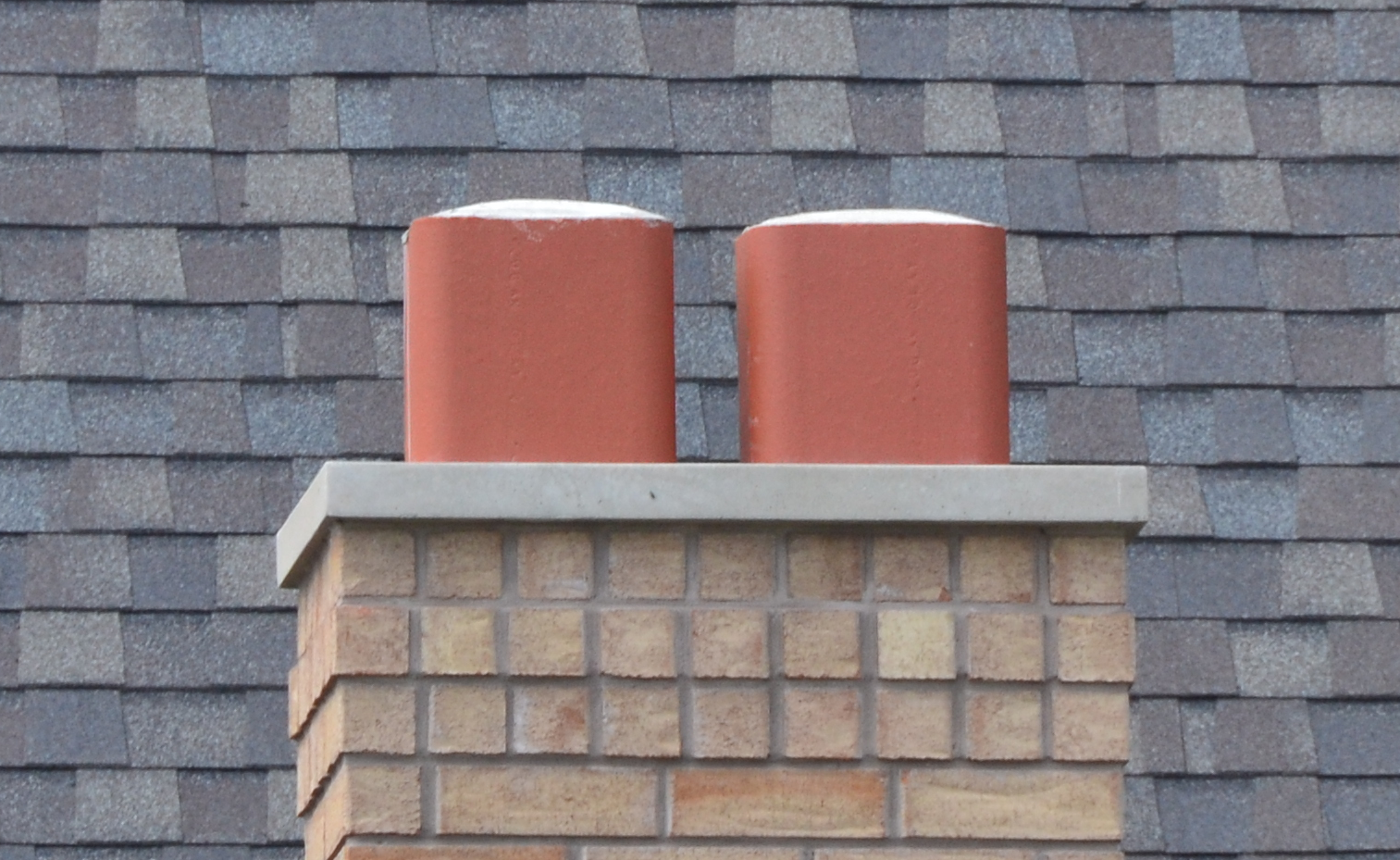
Stuffed Chimney

Santa can’t even get in ! The flues are plugged with concrete at the top… the kids’ll be pissed this Xmas!

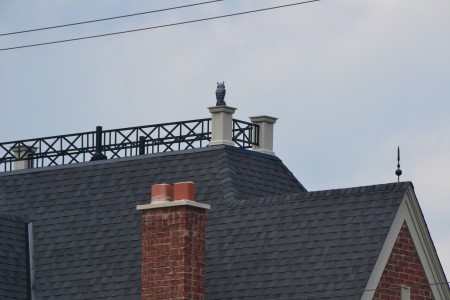
DSC_0162 (Custom)

Adding insult to injury, the faux-lightening rod along with the ornamental railing will be an obstacle to a good sleigh landing not to mention the plugged chimneys. Looks like some designer won’t be getting that new  drafting table for Xmas.

P1000299 (Custom)

If you’re going to go this far, have the decency to put the window in; the guys who have to fix the ice dam will appreciate the natural light.

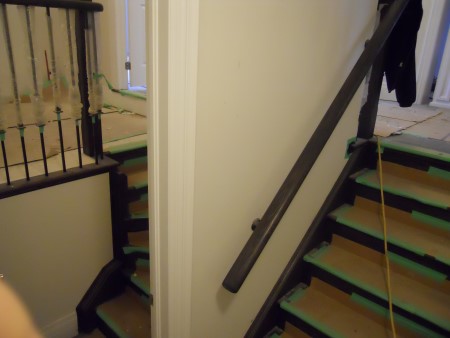
DSCN0458 (Custom)

Yup, those are two stair cases side by side going to the same places – its a His and Her’s thing I guess.

DSCN0468 (Custom)

Could have been a wickedly large master bedroom and now, who’s going to change the pot lights when they burn out? The video below gives a glimpse of the huge master bedroom, a huge skylight and two areas of the second floor fenced-off.

Comments Off

Greening Homes DER Beats PH NC Airtighness Standard

We had the good fortune yesterday to test at the pre-drywall stage, what is likely one of the most air tight Deep Energy Retrofit of an existing solid masonry home. The work was completed by the hard working crews of Greening Homes who achieved significantly better air tightness results than Passive House standard for renovations set at 1.0 Air Changes per Hour at 50 Pascals (ACH50) of pressure/depressurisation.

If that wasn’t enough, they even surpassed the 0.6 ACH50 PH standard for new construction  I won’t steal Greening Homes thunder, but suffice it to say they have all the details on their awesome blog! Of course the staff are a committed bunch who are detail fanatics, but we suspect the liquid applied air barrier likely contributed to the success!

Did I mention the drywall’s not even on yet? That’s right, the story just keeps getting better, this was a pre-drywall test with all penetrations plumbed through the enclosure. So keep your fingers crossed to see if they can better the score for the final air tightness test of the finished home!


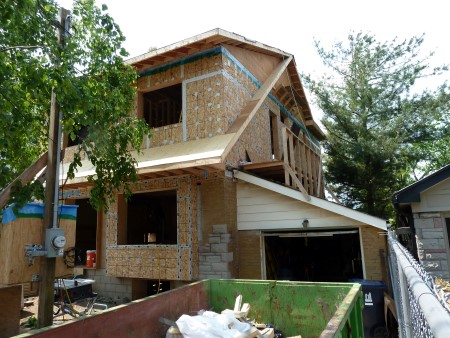
The build in progress where the solid block and brick masonry corner can still be seen in this earlier photo. The main floor was insulated on both sides of the old wall with Isocyanurate on the outside.

The build in progress where the solid block and brick masonry corner can still be seen in this earlier photo. The main floor was insulated on both sides of the old wall with Isocyanurate on the outside.

DSC_0267 (Custom)

Andrew, M-C, and Shane striking a pose and behind them the 2LBS spray foam that covers the inside of the masonry walls.

DSC_0269 (Custom)

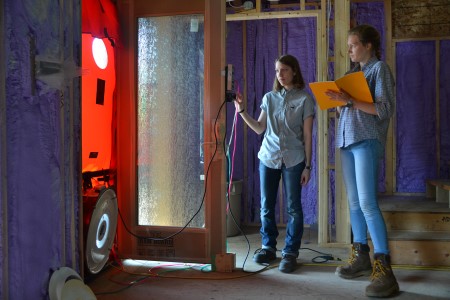
Humber College students extraordinaire Cassandra Heide and Emilia Lundh putting the house through its paces. Thanks for all your hard work on the Double Brick Study and best wishes in the fall.

DSC_0270 (Custom)

Martin Kuypers or Henry Co shows Steven Gray, the talented and focused Construction Manager for the renovation some new products.

DSC_0273 (Custom)

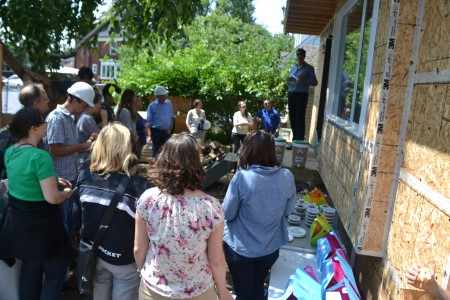
President of Greening Homes, Christopher Phillips giving the participants the low-down on the build.

DSC_0279 (Custom)

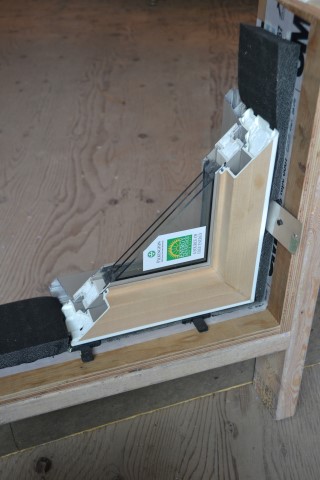
Amongst the many innovations,the use of a rolled, pre- compressed foam and U shims made for an excellent air seal around the windows.


Comments Off

Hardcore in Canadian Contractor

Finally Canadian Contractor magazine highlights the outstanding work of the lads at Hardcore Renos. Reporter Rob Blackstien does a great job capturing the spirit of this duo who share the solidly focused vision on beauty, durability and performance. Manny and Anderson pour their hearts and souls into their work and we’re glad to be able to work with them.

Congrats on the build Gents!

HArdcore

The new in this month’s Canadian Contractor magazine highlight the work of Hardcore Renos.

http://youtu.be/0H3K0hS79jA


Comments Off

Doug Tarry Homes – Big on Innovation

Had a chance to drop in last week on Doug Tarry of Doug Tarry Homes in St. Thomas, Ontario. Doug has a discovery home open right now that blows ENERGY STAR out of the water, and he’s implementing a number of changes that will help make the home more durable, cost less to operate, will be quieter and also be comfortable from basement to top floor. For a developer and builder, Doug is a rare breed in Canada as he sources local materials, innovates to cut call backs and does mentoring partnerships for efficiency breakthroughs that are sorely needed – he’s covering a lot of bases while making beautiful homes.

IMG_20140718_130735891_HDR

The kind of design that’s getting Doug Tarry Homes noticed!

As a high performance building auditor, my quick tour revealed a number of standard features on his builds that tract built homes in the GTA seem to turn a blind eye to: Attic hatch magnetic gaskets, foundation membrane top edge terminal strip seal to using UL approved tape to seal duct seams. Its evident that Tarry believes in the local economy and wants to incorporate as much locally manufactured goods as possible like using North Star windows and by using Roxul insulation in his walls. Did I mention his crews are comfortable making homes less than an air change per hour at 50 Pascals? That’s a lot tighter that ENERGY STAR’s 2.5 ACH and will make the Heat Recovery Ventilator earn its keep.

IMG_20140718_130036488

The brown dimpled membrane is buried, fastened regularly with orange grommets and the top edge caped with a terminal strip to prevent debris and even water from pouring into the gap and filling it. Why doesn’t everyone do this like Doug’s guys and the manufacturer specs?

Speaking of walls, Tarry’s cabal has come out with a great thermally broken basement wall assembly that will prevent condensation (especially in the first year of occupation). Typically, new concrete holds a lot of moisture and as it slowly cures, the unwanted moisture can get trapped behind the wall’s unbreathable poly where condensation can often be found in the first few months after construction.

IMG_20140718_115344301

This is a wall system designed by Doug Tarry Homes in conjunction with ROXUL and with the support of Building Science Corporation and Building Knowledge and contains insulation that is hydro phobic, a strip (top 2 feet of wall) of “Membrain” and a PT sill plate.

The innovative solution in the Optimum Basement Wall was the simple addition of a section of breathable air barrier (Certainteed’s Membrain) on the upper portion of the basement wall section. Of course, the 2×6 wall is filled with lovely hydrophobic Roxul and backed by a more rigid layer of Roxul insulation called Comfort Board IS. Incidentally, the comfort board is installed prior to the slab being poured to serve as a thermal break at the slab’s edge.

IMG_20140718_115642427

A top secret copy of the wall cross section… now you know where to place your sensors!


The new CSA F280 sizing requirements come into effect January 1 2015 and will seek to “right size” HVAC equipment and take into consideration the building’s air tightness so that air tight homes will finally get credit. To that end, Tarry’s partnered with the Quebec firm Dettson which designs, engineers and manufactures the Chinook furnace. The Chinook is a fully modulating furnace that can go as low as 15,000 BTU. The furnace line’s 15,000 and 30,000 BTU units have been available since 2014 and will be a great fit for the new F280 challenges.

IMG_20140718_115510994

Ahh the reliable Chinooks… this cute little guy is being managed by a swarthy group of francophone engineers who are driving down to St. Thomas periodically to check in on the development to the “micro forced air furnace”.

The missing link in North America is getting higher efficiencies with air conditioners that are attached to forced air furnaces and Dettson’s engineering staff are teaching the ECM’s controls how to better mesh blower speeds and conditioned space load requirements. This will allow the paired unit to work more efficiently with the outside, wall hung and compact ‘side discharge’ unit. It too will modulate outputs for significantly better efficiencies and year-round comfort. Dettson’s Marc Chénier expects to have this quiet, sleek outdoor wall hung AC addition in full production Q1 2015.

IMG_20140718_124722095

If the engineers at Dettson can make the marriage between the Chinook and this side discharge unit, we may see SEER ratings for central AC shoot up. Finally!

This last point is a big one. Like we blogged about last week, when it comes to cooling, its best to run the cooling system slow and steady to knock the humidity out of the air. We also talked about the old way of cobbling an HVAC systems for a house where a binary controlled furnace was hooked up to a binary controlled big clunky AC box that sat on the dirt outside and made for efficiencies that are significantly lower than prepackaged mini-split heat pumps that can run well over 25 SEER.

Unlike other builders, its clear Tarry’s got his building science down and knows his numbers for efficiency. When asked “Why didn’t you install a drain water heat recovery unit?” he replied;

“I felt the money would be more wisely spent by installing a top of the line furnace instead of drain recovery which needs serious water volume, like a young family, to recapture the investment cost. ”

At any rate, we left St. Thomas feeling like the drive from Toronto was worthwhile. Thanks for the tour Doug we appreciate you sharing what you’ve learned!

Comments Off

Tech Tape Desecration

Lets face it – building science is pushing the performance of adhesive tapes to a new levels and though I can’t profess to have my daughters’ ability in making fashionable duct tape purses,  I have been know to mis-apply good tape to get me out of a bind! I think Red Green would be impressed!

If you send me your photos, I will post and credit!


Car lights

Though subtle, the 6mil poly Tuck Tape blends in seamlessly onto the tail light cover. Been holding for nearly 5 years now!
IMG_20140721_094142433

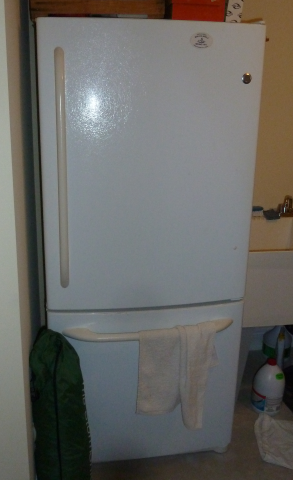
The WigLuv goes well with the wheat beer, pickled onions and Dijon. It gives the fridge a real European flavour.

Vac hose

The transition between the vacuum hose and the handle takes a real beating and WigLuv offers that supple yet grippy texture that may just make you feel like cleaning more often!
Comments Off